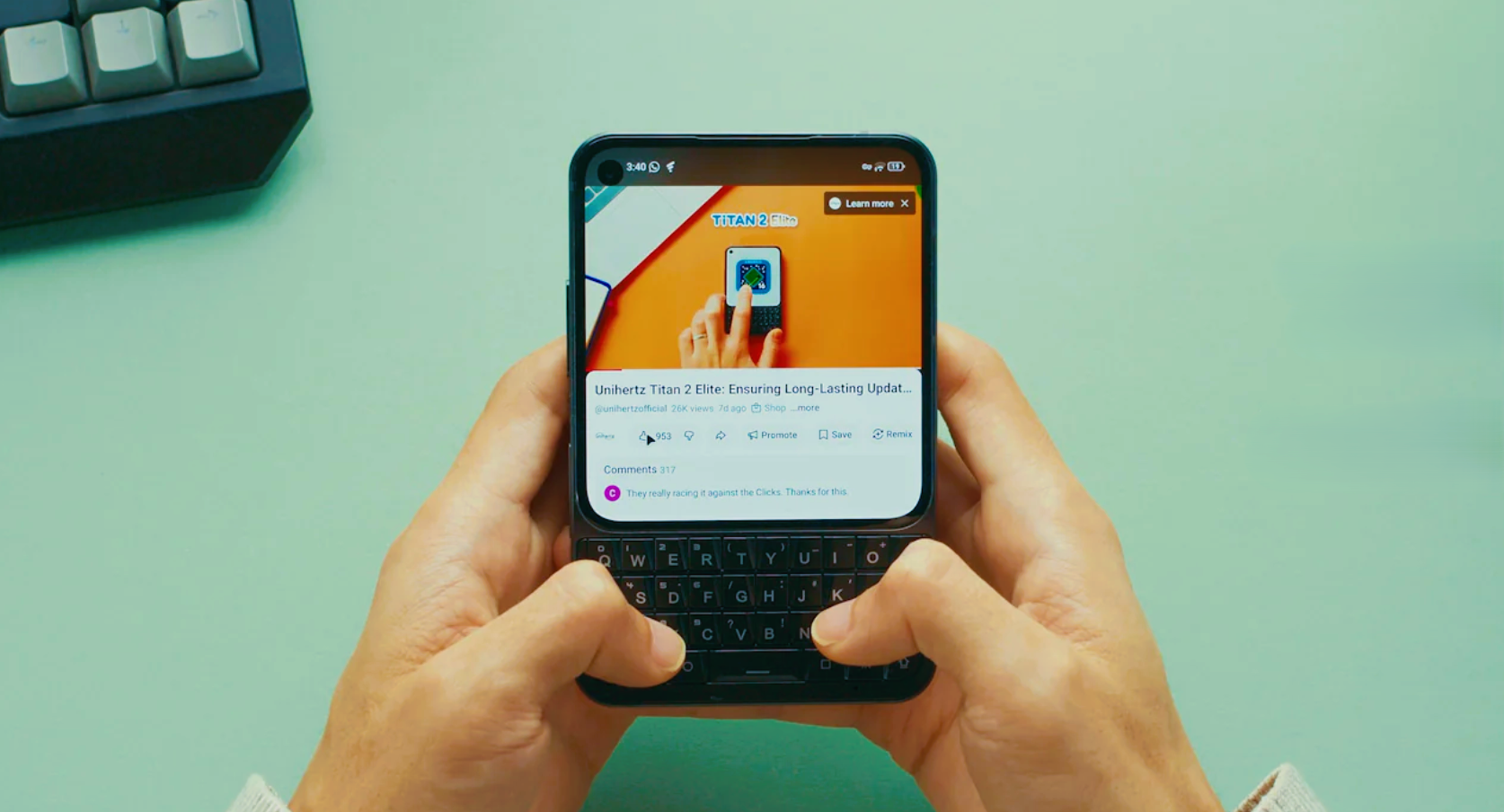

You are here because you’ve seen images of accessories with tactile keyboards or gotten wind of the BlackBerry-inspired Titan series.
Maybe you’ve also seen the ads for a new device built with a physical keyboard.
Now you ask—are tactile keyboards making a Comeback?
Well, you aren’t alone. For a while, the physical keyboard on smartphones has been treated as a relic.
Just fondly remembered but still functionally obsolete. Replaced by touchscreens for convenience and manufacturing efficiency.
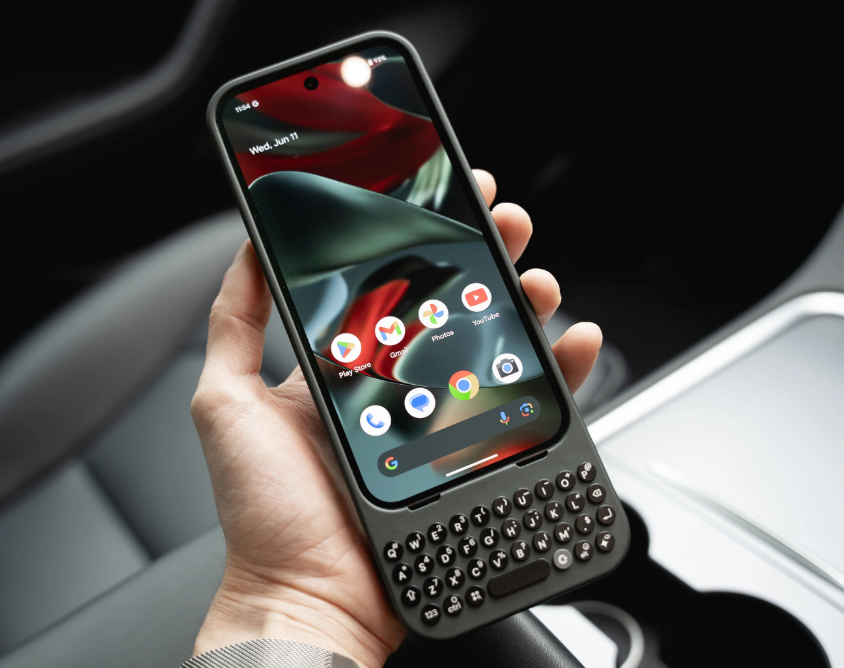
Yet in 2025 and now, physical keyboards are quietly resurfacing; from Clicks keyboard cases, to the Clicks Communicator, and the Android BlackBerry-inspired Titan series.
Seems like its no longer nostalgia and we are now looking at a re-emerging niche. One thing’s for sure—it’s intentional (and somewhat exciting), and might just have real value.
To get a better idea of what’s happening, we will need to dig a little deeper.
Some Historical Context
In the 2000s and 2010s, devices like the BlackBerry and Palm Treo defined mobile productivity.
With their physical keyboards, you got faster typing for emails and messaging, driven by higher tactile accuracy.
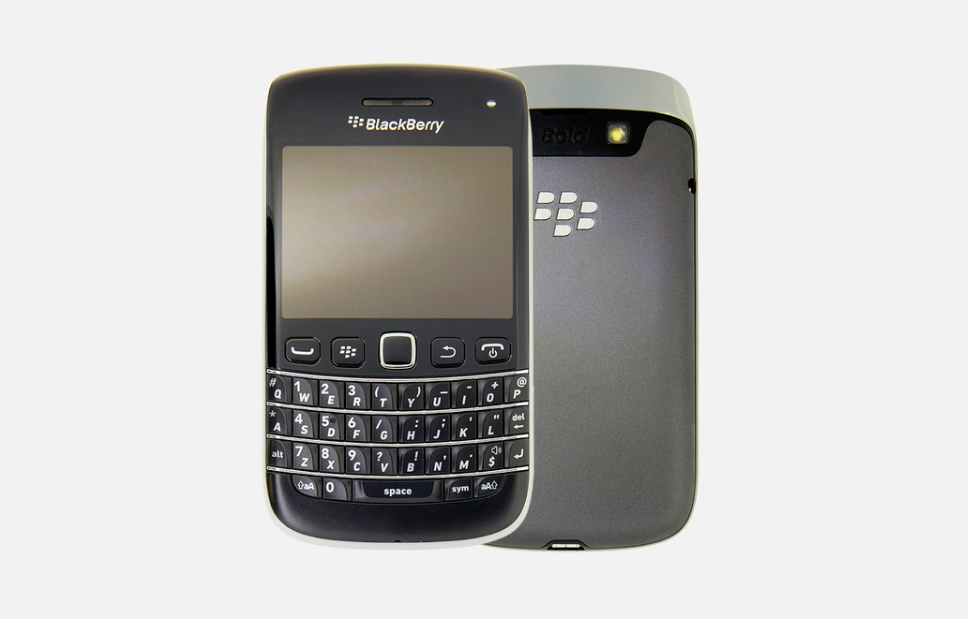
Then came the iPhone’s full-touch design. Androids soon followed suite, eventually giving way for the shift.
- Larger screens
- Virtual keyboards
- Predictive text
- Gestures
These are some of the key features that justified the obsolescence of the tactile keyboard.
So, the brands killed it. Manufacturers moved on. Consumers adapted.
One thing about adaptation though, is that it can be a product of coercion. Especially when there aren’t many other options out there.
The fact that I have to use it, doesn’t mean that I prefer it.
So, Why Are they Reappearing?
There doesn’t seem to be a mass-market demand, as we are barely witnessing a handful of brands revisiting the topic.
It’s rather taking a niche-like form, targeting users that disapprove the idea that slab phones are optimal for productivity and typing.
Let’s check out some of the arguments.
There’s a Renewed Focus on Messaging
Tactile keyboards don’t try to replace the smartphone—they build on it.
They enhance productivity by offloading typing to hardware keys. This gives users more usable screen space and faster text input.
User groups that stand to benefit the most include writers and journalists, business professionals, and power users who live for messaging apps.
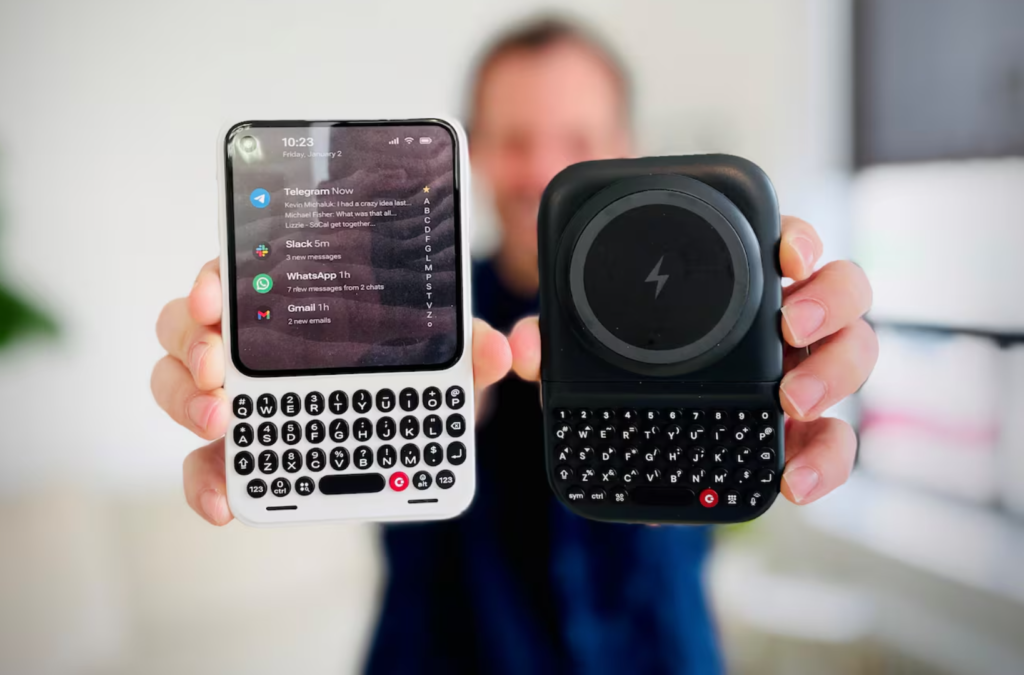
Slab Phones Aren’t Optimized for Typing
Screen-centric phones are taller and more awkward to type on, especially one-handed.
Despite smarter on-screen keyboards, users still struggle with typos, poor tactile feedback, and visual obstruction.
One study found that screen typing (avg. 38 WPM) is significantly slower than tactile keyboards (avg. 52 WPM).
There’s also a “visual attention” problem that the study highlights—unlike tactile keyboard users, touchscreen users constantly look at their fingers to avoid errors.
Nostalgia, But Practical
While nostalgia plays a role (a big one), today’s tactile keyboards aren’t trying to recreate the past.
They’re are more like spin-offs (that’re actually good); in that they’re compatible with operating and ecosystems users already bank on, and cases are modular and optional.
Moreover, Android 16 tactile keyboard implementations are just as secure as modern biometric-only devices.
Plus, for long-term use, there’re added ergonomic benefits from tactile feedback, unlike touch interfaces.
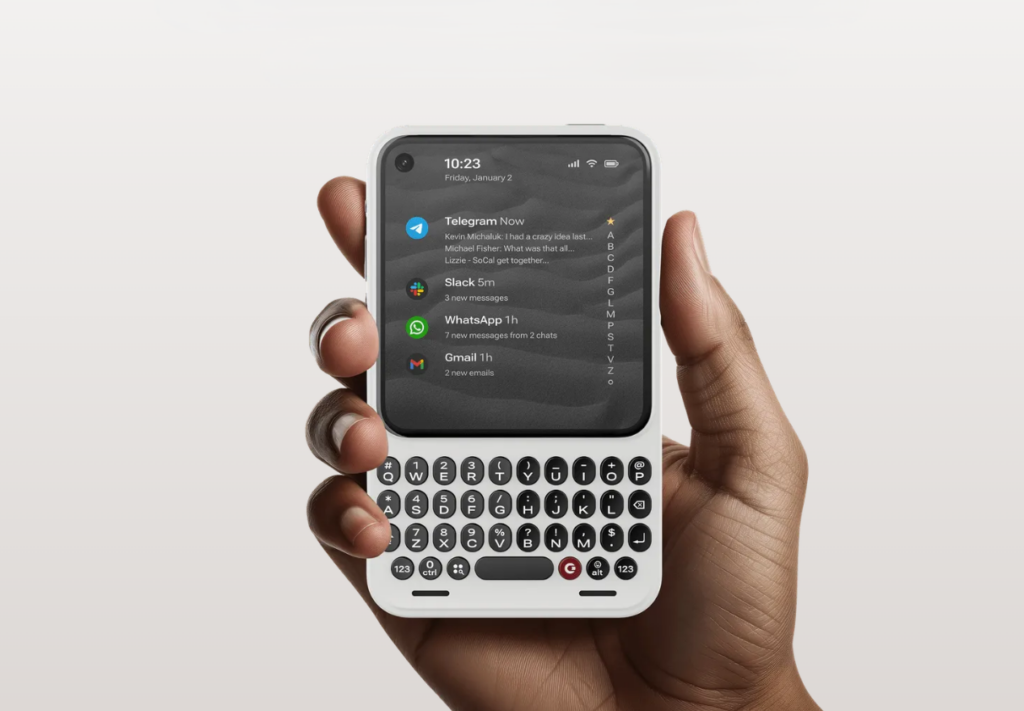
Benefits and Trade-Offs
I know I’ve mentioned a couple of tactile keyboard benefits in the body of this post, but I thought it’d make more sense compiled.
Benefits
- Improved typing accuracy and speed
- Better ergonomics
- Screen space efficiency
- Distinction in today’s homogeneous market
Trade-Offs
Despite the benefits, no technology is without its downsides.
- There’s added bulk to accommodate key travel and circuit—a thicker smartphone will be a dealbreaker for some users
- Users accustomed to gesture touch-typing and autocorrect may need to re-adjust to physical layouts
- Physical keyboards solve a specific problem—but substantially affect form factor
- Most users prioritize slim designs, large displays, and camera performance—limiting the tactile keyboard’s mainstream appeal
Verdict
The return of physical keyboards doesn’t mean touchscreens are failing.
It signals something more subtle—smartphone users are increasingly demanding specialization.
Just as folding and gaming phones have carved out niches, physical keyboards represent a push back against a one-size-fits-all design.
With that in mind, my verdict is that tactile keyboards are making a non-mainstream comeback, catering to a subset of users who value input quality over aesthetics and function over form.
What do you think? Would you get in on the physical keyboard trend and actually order a Titan, Clicks Communicator or case? Let me know down below 👇.